Before you bring a hamster home
Hamsters are small, but they are not “easy cage pets” that only need a tiny cage, a bowl of food, and a wheel. A happy hamster needs space, deep bedding, safe enrichment, a proper wheel, a balanced diet, and a calm owner who understands that hamsters are prey animals.
The best time to set everything up is before you get the hamster. That way, your hamster can move straight into a safe enclosure instead of starting in a temporary cage that may be too small or stressful.
Minimum enclosure goal
Choose one large enclosure with continuous floor space. Aim for 800+ square inches when possible.
Minimum bedding goal
Use at least 8 inches of safe bedding. 10–12+ inches is even better.
Wheel goal
Use a solid upright wheel. Most dwarfs need 8–10 inches. Most Syrians need 11–12+ inches.
Setup goal
The enclosure should feel full, covered, and natural with hides, tunnels, sprays, cork, chews, and dig areas.
The beginner mistake to avoid
Do not buy the tiny colorful cage kit first and “upgrade later.” Many starter cages are too small, too shallow, and come with unsafe or undersized accessories.
What hamsters are actually like
Hamsters are prey animals. That means their first instinct is often to hide, freeze, run, or avoid being grabbed. A new hamster may not want to be touched right away, and that is normal. Trust takes time.
Hamsters are also mostly active in the evening, night, and early morning. If you want a pet that is awake all day and wants constant handling, a hamster may not be the right animal. A healthy hamster may sleep through most of the day and become active after your room is quiet.
- They are not cage decorations. Hamsters need enrichment, space, and daily checks even if they do not want to be handled yet.
- They are usually solitary. New owners should keep one hamster per enclosure. Housing hamsters together can lead to stress, fighting, injury, or death.
- They are easily stressed. Loud noise, forced handling, frequent full cleanouts, and exposed cages can make them feel unsafe.
- They are food hoarders. Stashing food is normal. Do not remove clean dry food hoards unless they are dirty, moldy, or mixed with fresh food.
The enclosure: one large floor, not a tiny cage
Your hamster needs one large, continuous floor space. This means the main base of the enclosure should be wide and long enough for normal movement, digging zones, a proper wheel, hides, sand, and enrichment. Levels, shelves, and tubes do not replace floor space.
For a simple baseline, aim for 800+ square inches of unbroken floor space whenever possible. Dwarf hamsters may do well in the 600–800 square inch range, but larger is still better when the setup is done properly. Syrian hamsters should generally have 800+ square inches, with 1,000+ square inches being even better.

Large continuous base
This gives room for bedding, hides, a wheel, a sand bath, and natural movement.
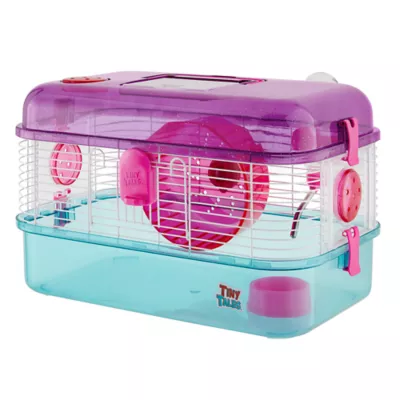
Small starter cage
These are often too small, too shallow, and usually come with undersized accessories.
| Size example | Floor space | Result | Notes |
|---|---|---|---|
| 24 in × 12 in | 288 sq in | Too small | Common starter cage size, but not enough for proper care. |
| 36 in × 18 in | 648 sq in | Better | May work for some dwarfs, but bigger is preferred. |
| 40 in × 20 in | 800 sq in | Recommended baseline | A strong minimum target for most setups. |
| 48 in × 24 in | 1,152 sq in | Excellent | More room for bedding, clutter, foraging, and activity zones. |
Deep bedding: your hamster's underground home
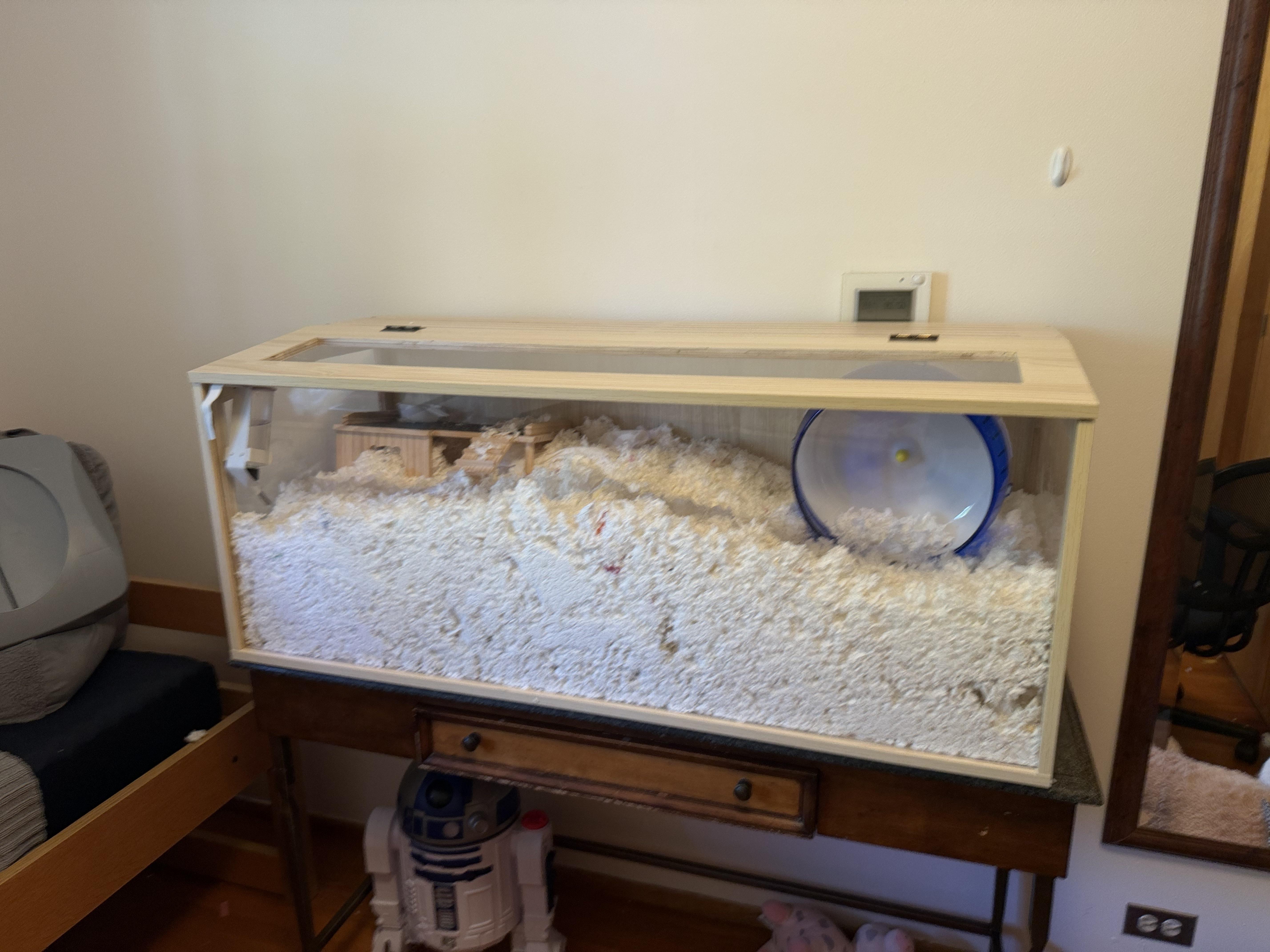
Bedding is not just floor covering. It is what your hamster uses to dig, tunnel, nest, and feel hidden. In the wild, hamsters create underground burrow systems. Your enclosure should give them enough depth to act on that instinct.
Aim for at least 8 inches of bedding. If your enclosure allows it, 10–12+ inches is better. You do not need the entire cage to be the same depth. Many good setups have one deep burrowing area and one lower area for the wheel, water, and sand bath.
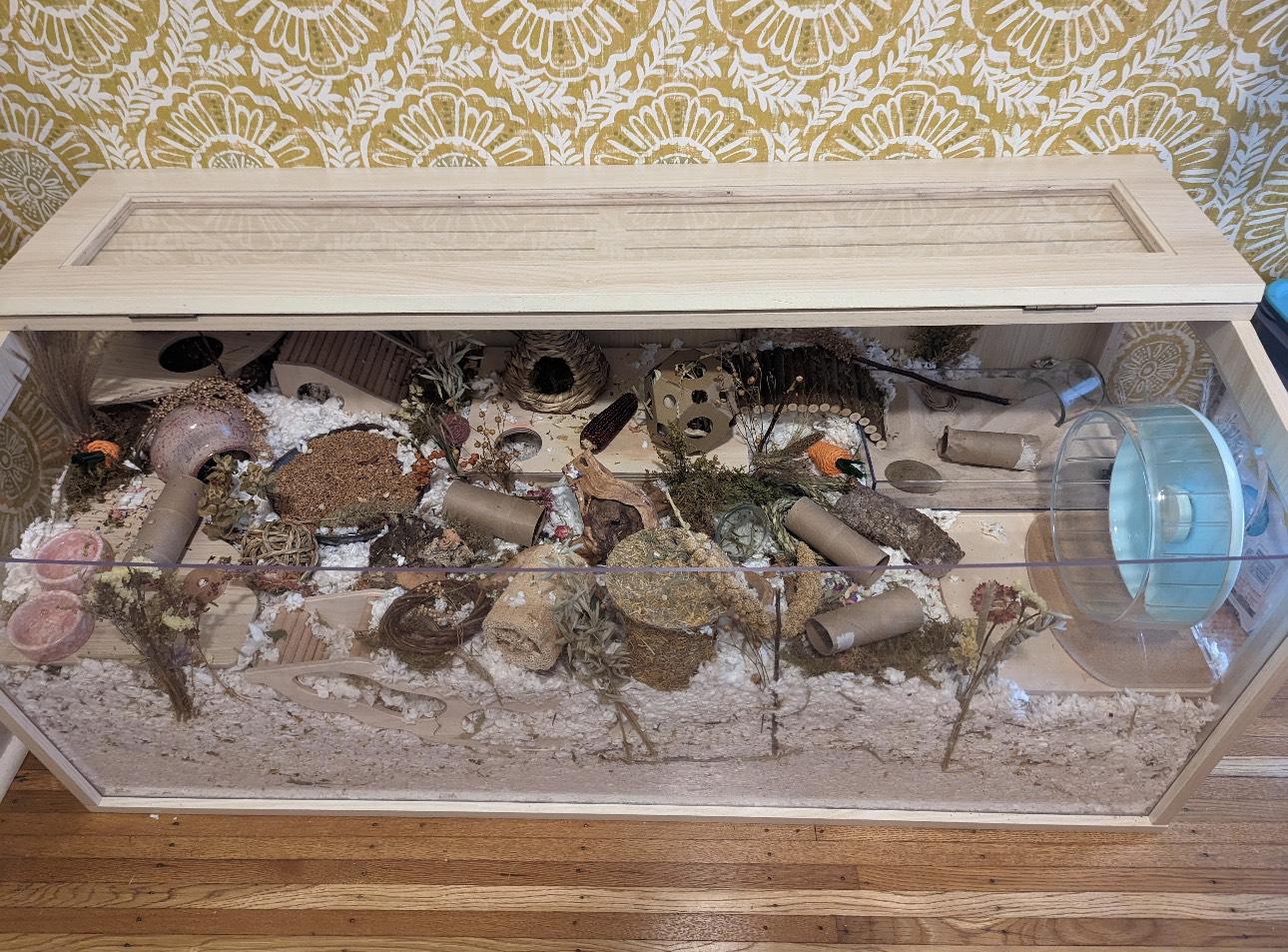
Deep bedding zone
Deep bedding lets your hamster dig, hide, tunnel, and build a secure sleeping area.
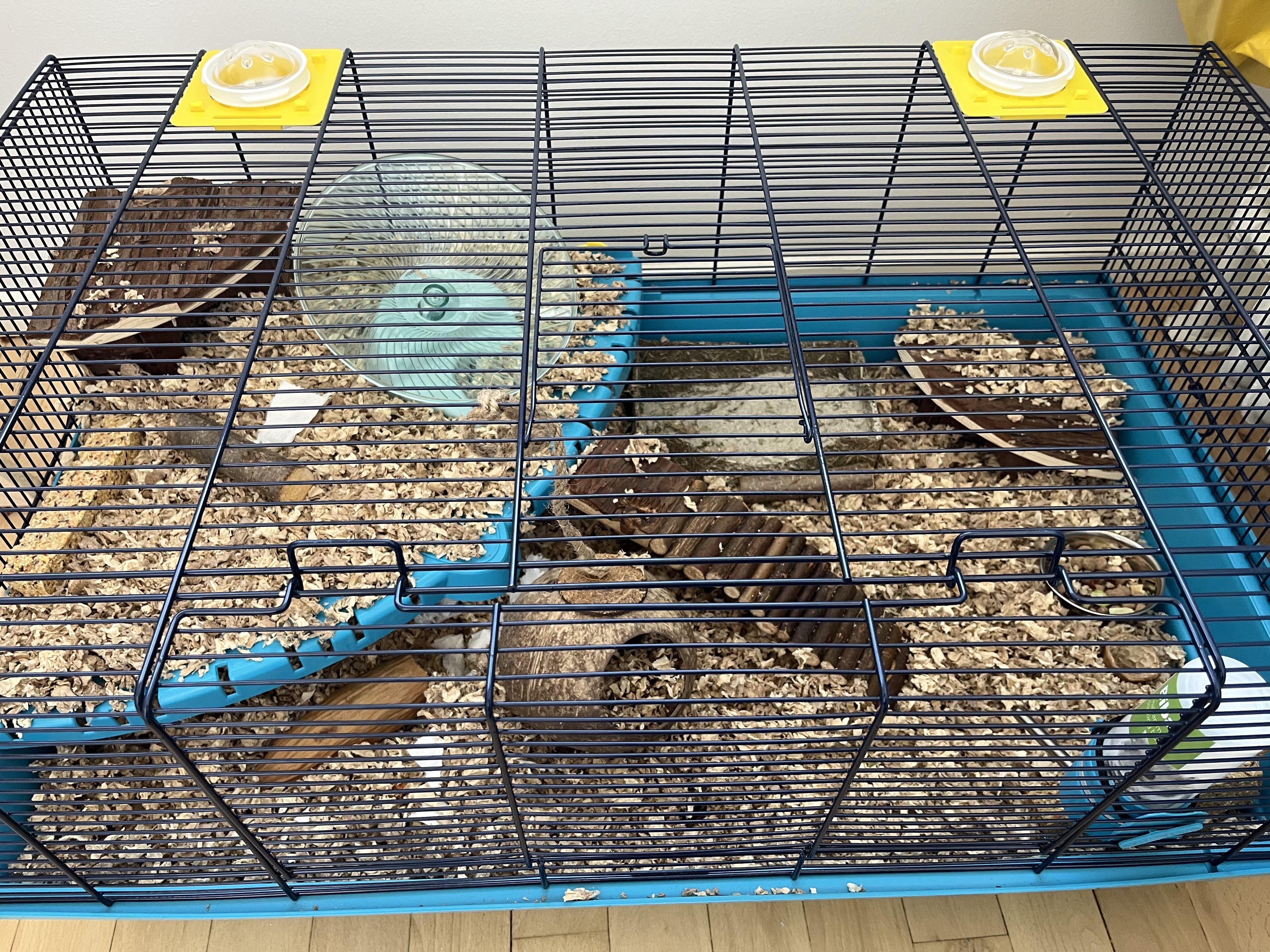
Shallow bedding
A thin layer may look clean, but it does not allow real burrowing.
- Use safe bedding. Unscented paper bedding and aspen are common safe options. Many owners mix bedding types to help tunnels hold shape.
- Pack it gently. Loose bedding compresses. Lightly pressing it down helps it become more stable for tunnels.
- Support heavy items. Wheels, sand baths, and heavy hides should sit on platforms or stable surfaces so they do not collapse burrows.
- Avoid unsafe bedding. Do not use pine, cedar, scented bedding, dusty bedding, cotton fluff, or random outdoor materials.
The wheel: safe exercise every night
A wheel is one of the most important items in the enclosure. Hamsters are active animals and may use their wheel for long periods at night. The wheel needs to be large, solid, stable, and comfortable.
The easiest way to judge wheel size is by watching your hamster run. Their back should stay straight. If their back bends upward like a banana, the wheel is too small.

Large solid wheel
A safe wheel has a solid running track and lets the hamster run without arching their back.
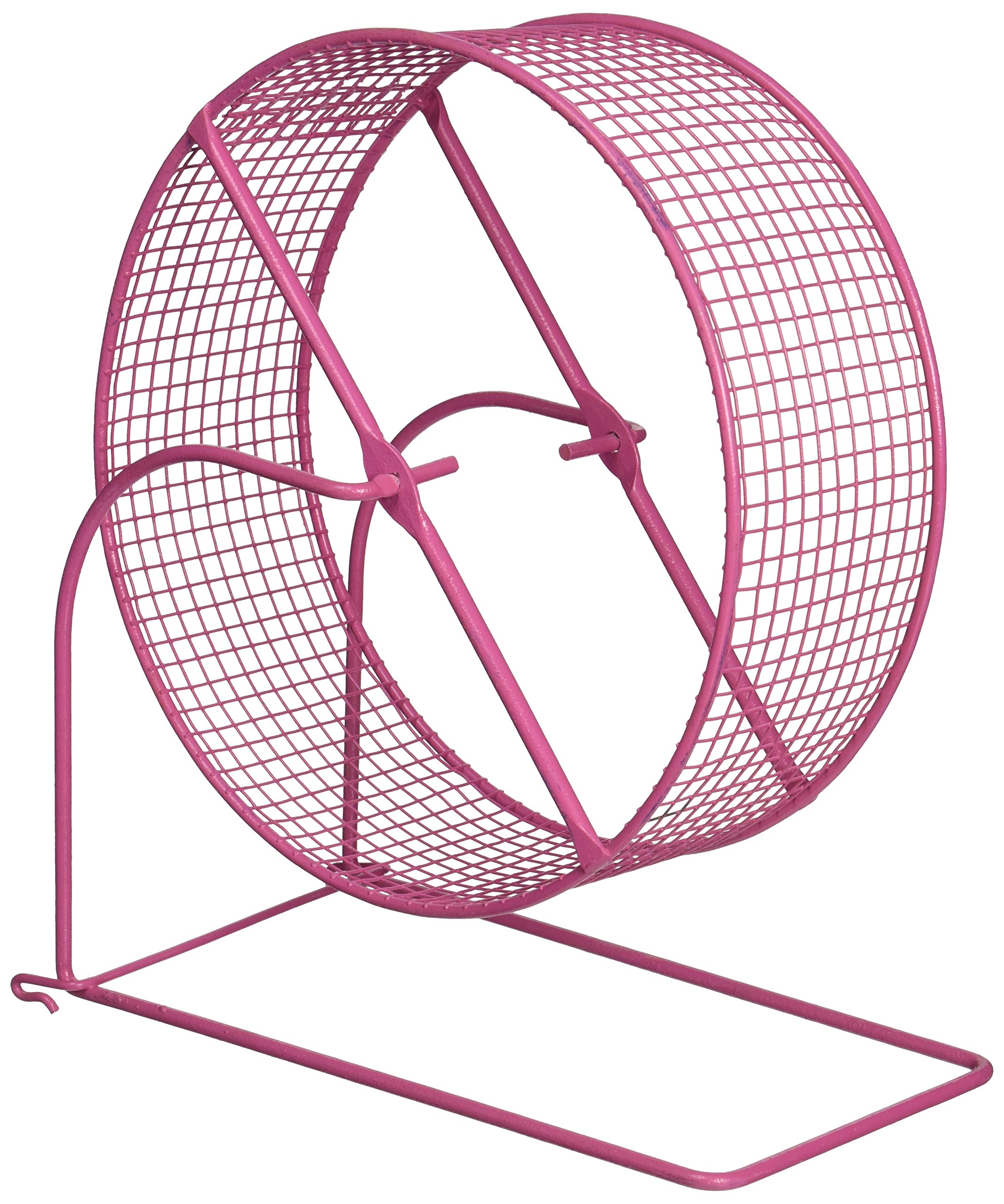
Wire or mesh wheel
Wire, mesh, and ladder-style wheels can catch feet or toes and are uncomfortable to run on.
| Hamster type | Minimum wheel | Better target | Check this |
|---|---|---|---|
| Dwarf hamster | 8 inches | 8–10 inches | Back stays straight and the wheel is easy to turn. |
| Roborovski hamster | 8 inches | 8–10 inches | The wheel should spin smoothly without flinging them. |
| Chinese hamster | 10 inches | 10–11 inches | Their longer body may need more room than small dwarfs. |
| Syrian hamster | 11 inches | 12+ inches | Large Syrians often need a 12 inch wheel or bigger. |
Enrichment: make the enclosure feel safe and interesting
Hamsters do not want a wide open cage. They are prey animals, so open space can feel exposed. A good enclosure should feel full, covered, and natural. Your hamster should be able to move from hide to tunnel to cork log to sand bath without crossing a big empty area.
Enrichment gives your hamster choices. They can hide, dig, chew, forage, climb over low objects, explore textures, and search for food. This prevents boredom and helps the enclosure feel like a real habitat instead of an empty box.

Foraging and clutter
Sprays, herbs, tunnels, cork, and hides make the enclosure more natural and interesting.
Empty setup
Empty cages can leave hamsters bored, exposed, and stressed.
- Hides Use multiple hides, not just one house. Multi-chamber hides are especially useful for nesting and food storage.
- Cork logs and tunnels These create safe covered paths and make the enclosure feel fuller.
- Sprays and scatter feeding Let your hamster work for food by searching, sniffing, and gathering.
- Dig boxes Add safe textures like coco fiber, cork granules, aspen, or paper bedding in a separate digging area.
- Chews Safe wood chews, cardboard, and other chew items give your hamster something healthy to work on.
Food, treats, and water
A hamster needs a proper hamster food mix as the main diet. The goal is variety, not just one type of pellet or a bowl full of sunflower seeds. A good mix gives grains, seeds, and protein sources in a balanced way.
Fresh water should always be available. A bottle or bowl can work, but it must be checked daily. Bowls should be shallow and stable so they do not tip or soak the bedding.
- Use a proper food mix. Choose food made for hamsters, not rabbits, guinea pigs, or generic “small animals.”
- Scatter feed some of the food. This turns feeding into enrichment and encourages natural foraging.
- Limit sugary treats. Dwarf hamsters are especially prone to issues with too much sugar. Fruit and sweet treats should be very limited.
- Remove old fresh food. Vegetables and moist foods should not be left buried where they can mold.
- Check water every day. Make sure the bottle is working or the bowl is clean and not filled with bedding.
Simple beginner feeding tip
Use the main food mix as the daily base, scatter part of it around the enclosure, and treat extras like seeds, nuts, fruit, and store treats as occasional small add-ons.
Sand bath and hygiene
Hamsters clean themselves by grooming, and many enjoy using a sand bath. Sand helps keep their coat in better condition and gives them another natural activity area.
Use safe, dust-free sand. Do not use chinchilla dust, scented sand, calcium sand, wet sand, or anything powdery. The sand bath should be large enough for your hamster to turn around and roll comfortably.
- Use sand, not dust. Dusty products can irritate your hamster's breathing.
- Keep it dry. Wet sand can clump, smell, or become uncomfortable.
- Sift or refresh it. Some hamsters use the sand bath as a toilet, so clean it as needed.
- Never bathe a hamster in water. Water baths are stressful and can be dangerous unless a vet specifically instructs otherwise.
Taming and the first week
When your hamster first comes home, they need time to settle in. The enclosure, smells, sounds, and people are all new. Do not grab them or force handling right away. Start slow and let them learn that your hand is not a threat.
- Days 1–2: leave them mostly alone. Give food and water, check they are safe, but avoid unnecessary handling.
- Start with your voice. Sit near the enclosure and talk softly so they get used to you.
- Offer treats from your fingers. Let them approach. Do not chase them around the enclosure.
- Use a mug or tunnel for lifting at first. If you need to move them, let them walk into a container instead of grabbing from above.
- Keep sessions short. Stop before your hamster gets overwhelmed.
Important
Being bitten does not mean your hamster is mean. It usually means they are scared, startled, stressed, or your hand smells like food.
Cleaning without stressing your hamster
Hamsters rely heavily on scent. If you remove all bedding, destroy the nest, wash everything, and rearrange the whole enclosure too often, your hamster may feel like their home disappeared.
Instead of constantly doing full cleanouts, spot clean dirty areas. Remove wet bedding, old fresh food, and soiled sand. Keep clean bedding, tunnels, and the nest intact whenever possible.
- Daily Check food, water, wheel function, and obvious messes.
- Every few days Spot clean pee areas and sift or refresh the sand bath if needed.
- As needed Remove old fresh food, damaged items, or heavily soiled bedding.
- Full cleanouts Avoid doing them too often. When needed, keep some clean old bedding so the enclosure still smells familiar.
Common unsafe products to avoid
A lot of unsafe or outdated hamster products are still sold in pet stores. Do not assume something is safe just because the package has a hamster on it.
| Product | Why to avoid it | Safer choice |
|---|---|---|
| Tiny starter cages | Too small, too shallow, and often come with bad accessories. | Large tank, bin cage, or proper hamster enclosure. |
| Wire wheels | Gaps can catch feet and toes. | Large solid upright wheel. |
| Cotton fluff | Can tangle around limbs or cause blockages if swallowed. | Plain toilet paper or unscented tissue. |
| Pine or cedar bedding | Aromatic oils can irritate hamsters. | Unscented paper bedding or aspen. |
| Hamster balls | Poor control, poor ventilation, stress, and injury risks. | Safe supervised play area or bonding area. |
| Tall climbing toys | Hamsters can fall and injure themselves. | Low cork logs, tunnels, bridges, and covered paths. |
| Scented products | Strong smells can stress or irritate hamsters. | Unscented bedding, sand, and cleaning products. |
When to call a vet
Contact an exotic vet if your hamster is not eating, not drinking, losing weight, breathing strangely, has diarrhea, has a wet or dirty rear, is injured, is unusually cold, or is suddenly very weak or inactive.
Beginner setup checklist
Use this checklist before bringing your hamster home. It is much easier to fix the setup before your hamster is already living in it.
Keep learning
This page gives you the full beginner overview. The guides below go deeper into each major part of the setup.