Why wheel size matters so much
A hamster wheel is not just a toy. For most hamsters, it is one of the most important enrichment items in the enclosure. Hamsters are naturally active animals and may run for long periods during the night. Because they use their wheel so often, the wrong wheel can become a daily source of strain instead of healthy exercise.
The main goal is simple: your hamster should be able to run with a straight, natural back. If the wheel is too small, the hamster has to curve their spine upward while running. That arched position may look minor at first, but repeated use over many nights can cause discomfort, stress, and possible long-term back issues.
The easiest rule
If your hamster's back curves while running, the wheel is too small. Choose a larger wheel until their back stays straight and their head does not have to lift awkwardly.
Proper vs. improper wheels
These examples show what to look for when judging a wheel. The exact brand matters less than the size, surface, stability, and whether your hamster can use it safely.
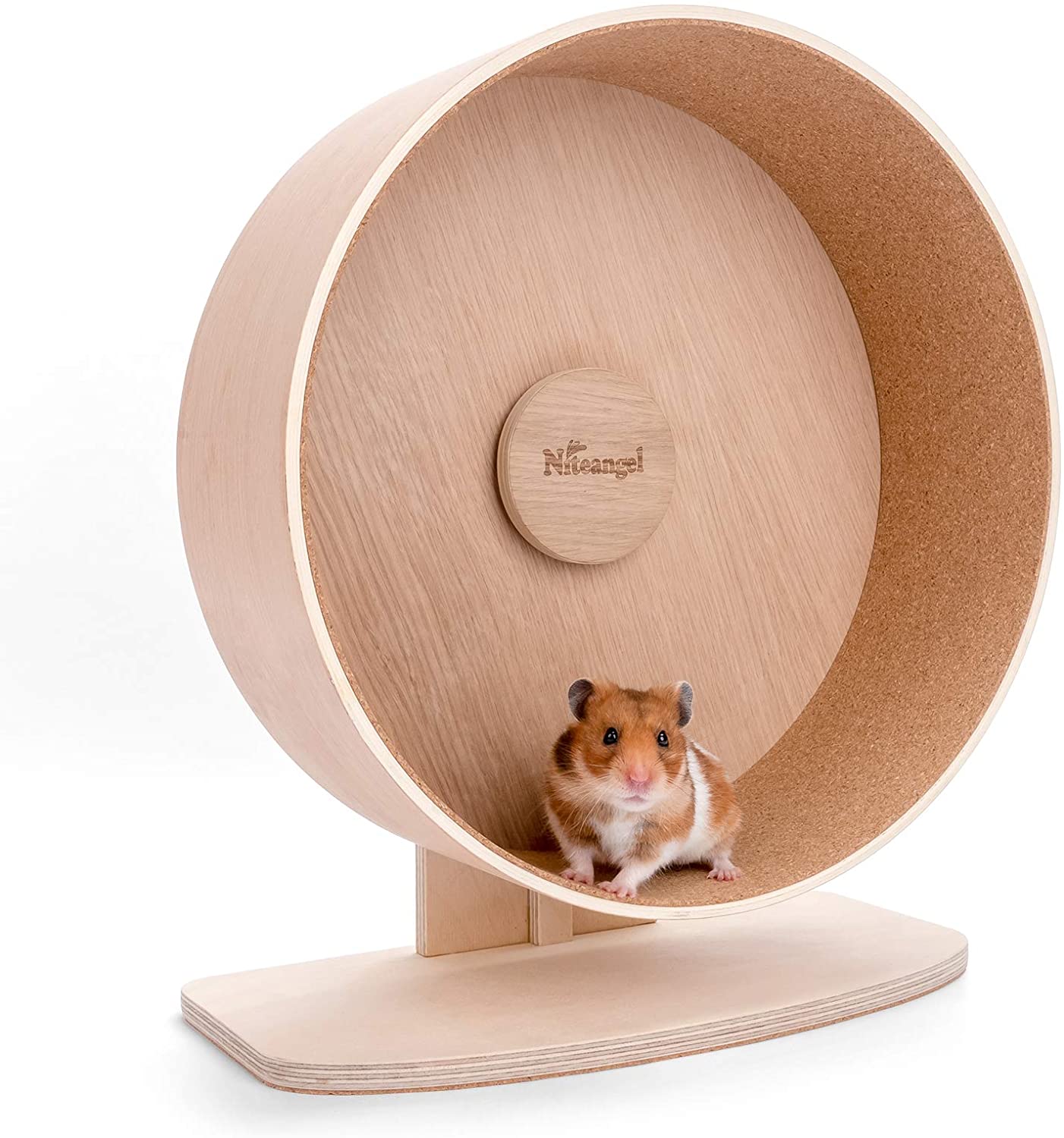
Large solid upright wheel
A safe wheel should be large enough for straight-back running, have a solid running surface, and spin smoothly without wobbling.
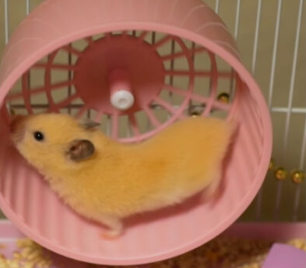
Wheel is too small
If the hamster's back arches upward, the wheel is not suitable. Many wheels included with small store cages are too small.
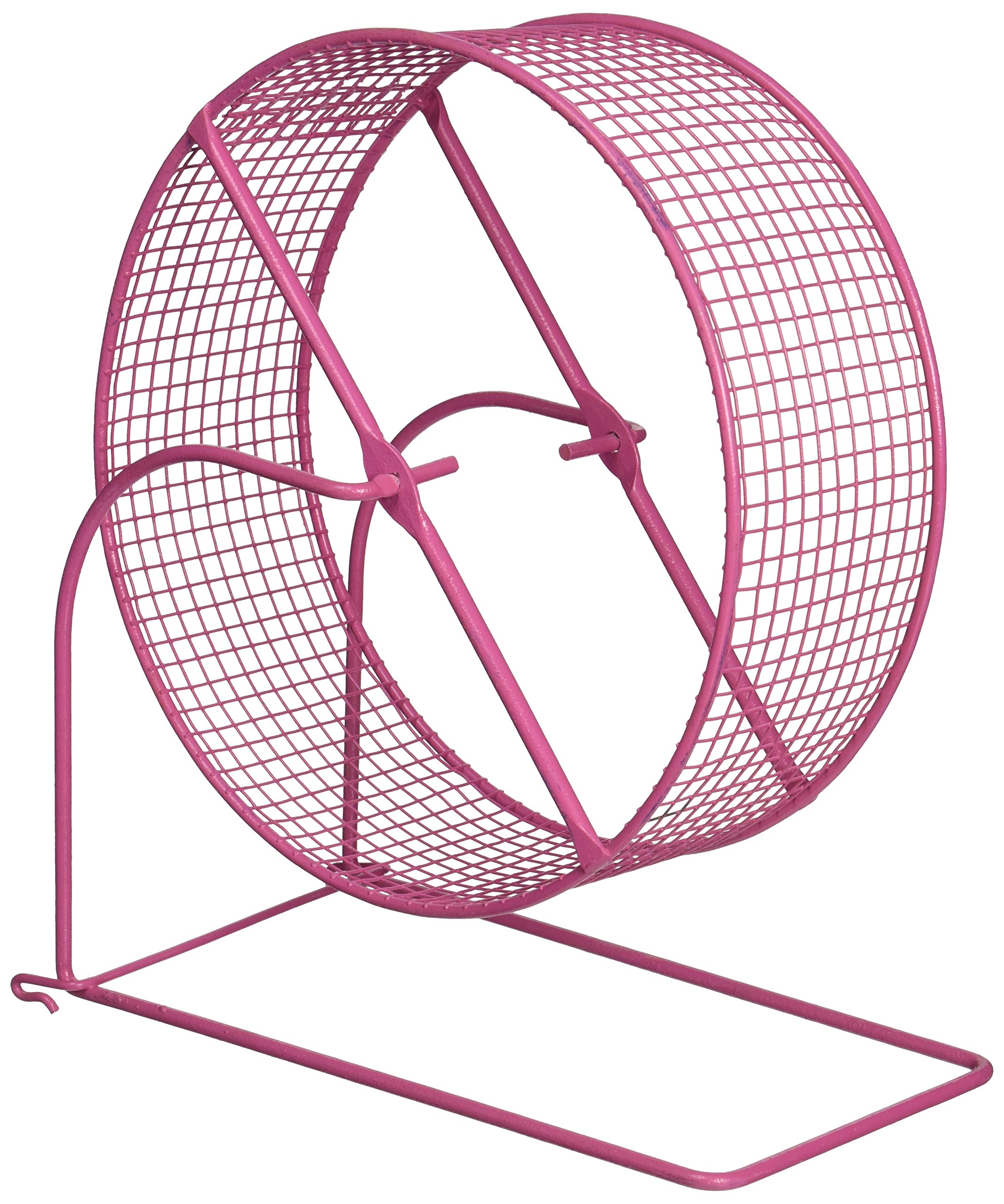
Wire, mesh, or ladder-style wheel
Open gaps can catch toes, feet, or legs. A solid running track is much safer and more comfortable.
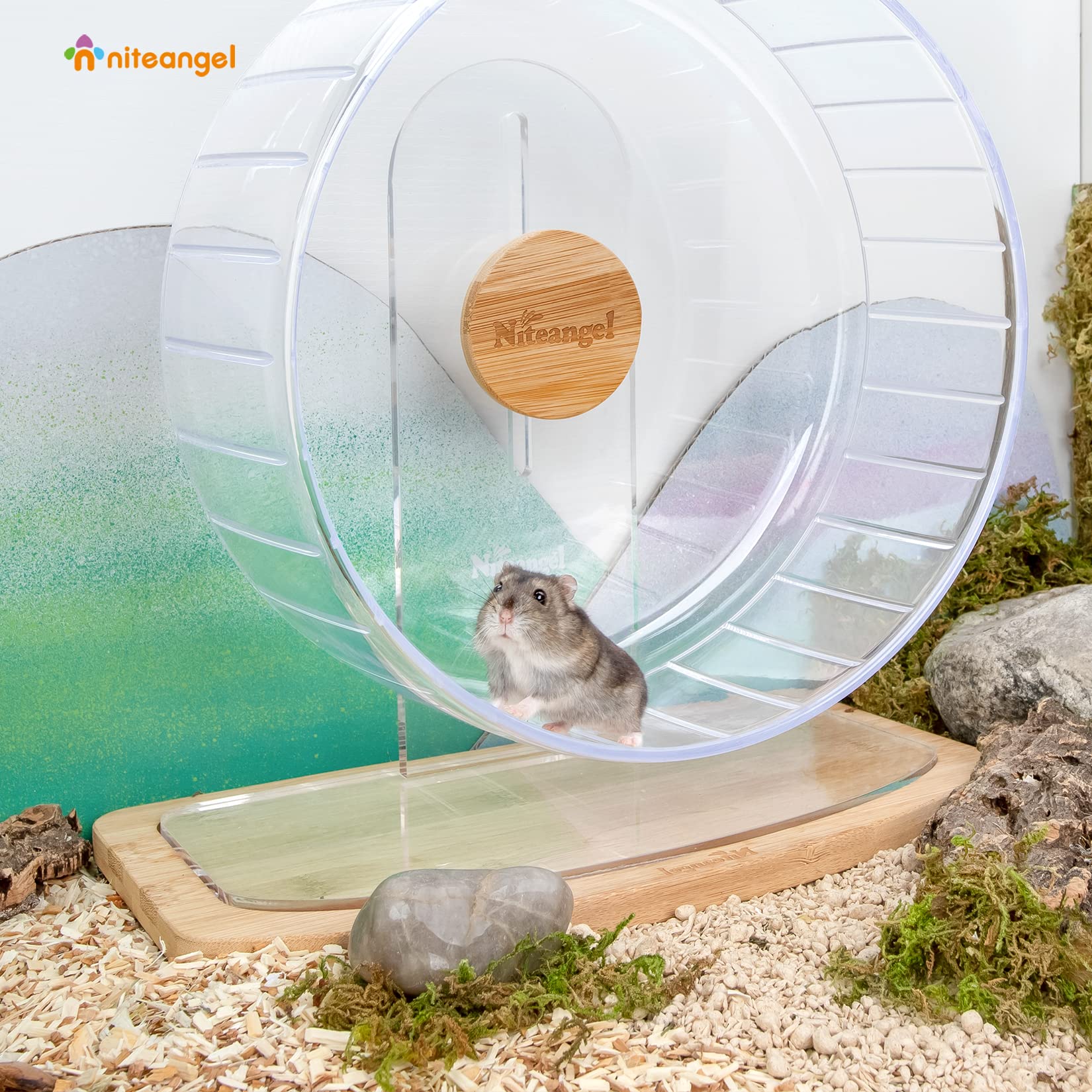
Stable placement
The wheel should sit flat, stay stable, and have enough clearance so bedding does not jam underneath it.
Recommended wheel sizes
Wheel size depends on the hamster's species and body size. Some hamsters need more than the minimum, especially large Syrian hamsters. When in doubt, choose the larger wheel as long as your hamster can still turn it easily.
| Hamster type | Minimum wheel size | Better target size | What to check |
|---|---|---|---|
| Dwarf hamster | 8 inches | 8–10 inches | Back stays straight and the wheel is light enough to spin. |
| Roborovski hamster | 8 inches | 8–10 inches | Wheel should spin smoothly but not be so light that the hamster flips constantly. |
| Chinese hamster | 10 inches | 10–11 inches | Longer body means they may need more room than very small dwarfs. |
| Syrian hamster | 11 inches | 12 inches or larger | Large Syrians often need a 12 inch wheel to run comfortably. |
How to tell if the wheel fits
The best way to judge a wheel is to watch your hamster use it. Product labels can be misleading, and some wheels marketed for hamsters are only suitable for very small dwarf hamsters or not suitable at all.
- Look at the back. The back should stay mostly straight while running. A curved or banana-shaped posture means the wheel is too small.
- Look at the head position. Your hamster should not have to crane their head upward to run.
- Check the running surface. The track should be solid, smooth enough to be comfortable, and not made of open wire or large mesh.
- Check stability. The wheel should not wobble, tip, scrape the bedding, or shake the enclosure while your hamster runs.
- Check effort. A wheel that is too heavy may discourage use. Your hamster should be able to start and keep it moving naturally.
Unsafe wheel types to avoid
Some wheels are commonly sold in pet stores even though they are not ideal for hamster safety. Avoid choosing a wheel just because it came with a cage or says “hamster” on the package.
- Wire wheels These have open bars or rungs where feet and toes can slip through. They can also create an uncomfortable running surface.
- Mesh wheels with large gaps Mesh may look more solid than wire, but gaps can still catch nails or feet. A fully solid track is safer.
- Tiny cage-included wheels Many colorful starter cages include wheels that are much too small, especially for Syrian hamsters.
- Unstable saucers Flying saucers are not a true replacement for a proper upright wheel. They can encourage curved running and may launch the hamster if used too fast.
- Wheels with sharp seams or rough edges Always feel the inside track. If it scratches your hand, it may irritate your hamster's feet.
Solid upright wheels are usually best
A proper upright wheel with a solid running surface is usually the safest choice. It supports a more natural running posture and gives the hamster a consistent surface under their feet. The wheel should be open enough for easy entry, but not have dangerous gaps along the track.
Plastic, acrylic, and wooden wheels can all be suitable if they are large enough, stable, and safe. Wooden wheels may need a protective coating if your hamster pees on the wheel, while plastic or acrylic wheels are usually easier to wipe clean.
A good wheel setup should have enough space around it, a stable base, and clearance from bedding so it can spin freely.
Where to place the wheel
Place the wheel on a flat, stable area of the enclosure. If the bedding is deep, it often helps to place the wheel on a platform or section with lower bedding so it does not get buried or jammed. Make sure the wheel cannot fall over while your hamster is running.
Leave space behind and around the wheel so it does not rub against glass, wood, cage bars, hides, or bedding. If you hear scraping, clicking, or dragging, adjust the placement before leaving it in the enclosure overnight.
Cleaning and maintenance
Hamsters sometimes pee or leave food inside their wheel. Check the wheel regularly and clean it when needed. A dirty wheel can become slippery, smelly, or irritating to the feet.
- Wipe plastic or acrylic wheels often. Use pet-safe cleaning methods and make sure the wheel is fully dry before returning it.
- Inspect wooden wheels. If urine soaks into untreated wood, it can become difficult to clean and may need replacement.
- Check for damage. Replace wheels with cracks, sharp edges, loose stands, or broken bearings.
- Listen for new noises. Sudden squeaking, grinding, or wobbling can mean the wheel needs cleaning, adjustment, or replacement.
Common mistakes
The most common mistake is buying a wheel based on the cage size instead of the hamster's body size. A wheel should not be smaller just because the enclosure is small. If the enclosure cannot fit a properly sized wheel, the enclosure itself is likely too small.
Another mistake is assuming a hamster will stop using a bad wheel if it hurts them. Many hamsters will continue using a wheel even when it is too small or uncomfortable because running is a strong natural behavior. It is the owner's job to make sure the wheel is safe before relying on the hamster's choice.
Final recommendation
For dwarf hamsters, start with an 8–10 inch solid upright wheel. For Syrian hamsters, start with an 11–12 inch solid upright wheel, with 12 inches being the safer choice for many adults. Always judge the final choice by your hamster's posture while running.