Why deep bedding matters
Deep bedding is one of the most important parts of a proper hamster enclosure. Hamsters are natural burrowers, and in the wild they create underground tunnel systems with sleeping chambers, food storage areas, and safe hidden spaces. Bedding is not just something to cover the floor. It is the material your hamster uses to build their home.
When bedding is too shallow, a hamster cannot dig stable tunnels or create a real burrow. This can make the enclosure feel exposed, boring, and unnatural. Deep bedding gives your hamster more control over their environment and allows them to act on one of their strongest instincts.
The easiest rule
Thin bedding is not enough. Aim for at least 8 inches of bedding, with 10–12+ inches being much better whenever the enclosure allows it.
Proper vs. improper bedding setups
The goal is to give your hamster enough bedding to dig down, shape tunnels, and create hidden nesting areas. A shallow layer may look neat, but it does not give your hamster the ability to burrow properly.
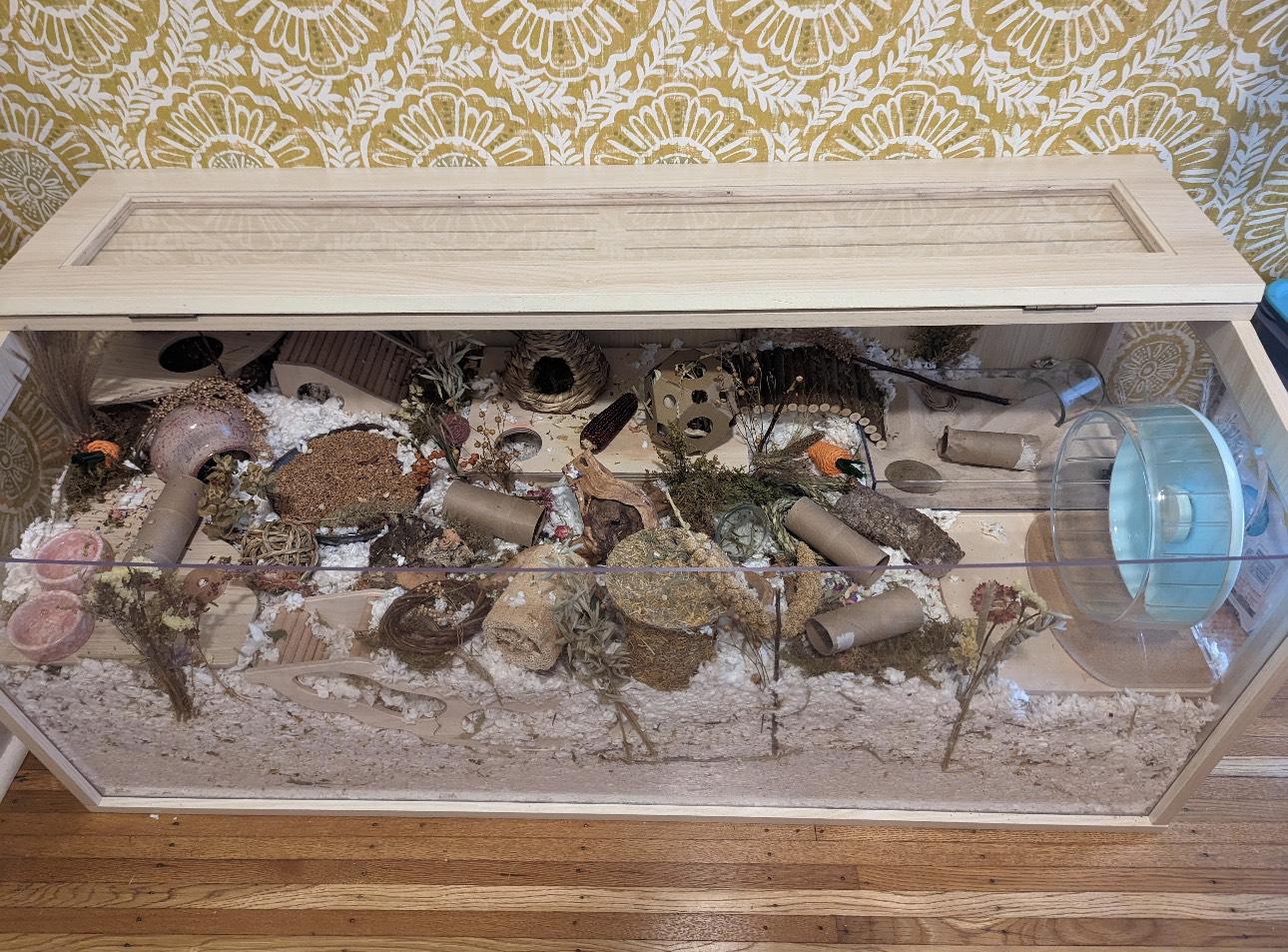
Deep bedding area
A proper setup gives your hamster enough depth to dig, tunnel, nest, and build hidden spaces.
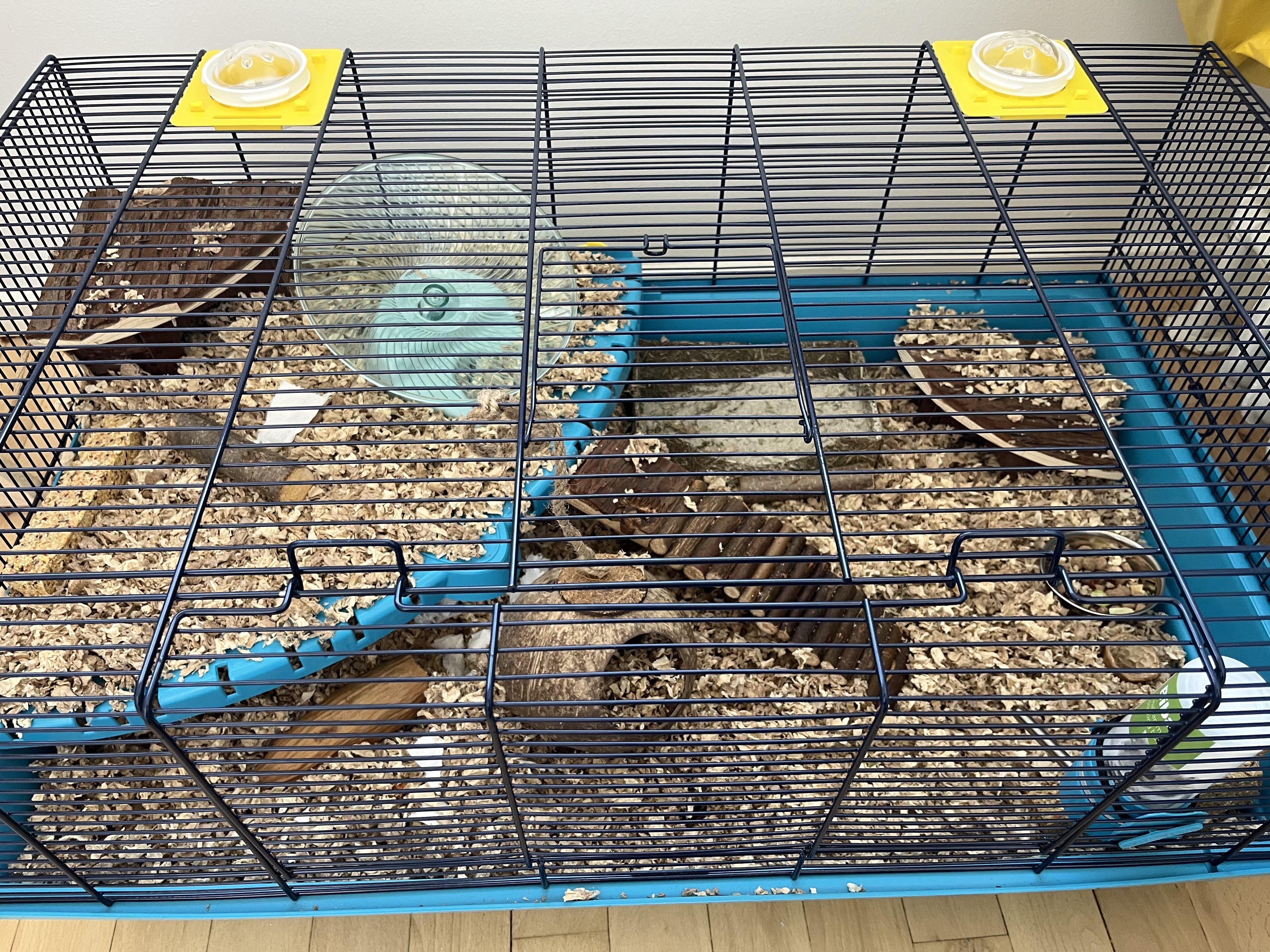
Shallow bedding
A thin layer does not allow natural burrowing and can leave the enclosure feeling exposed and empty.
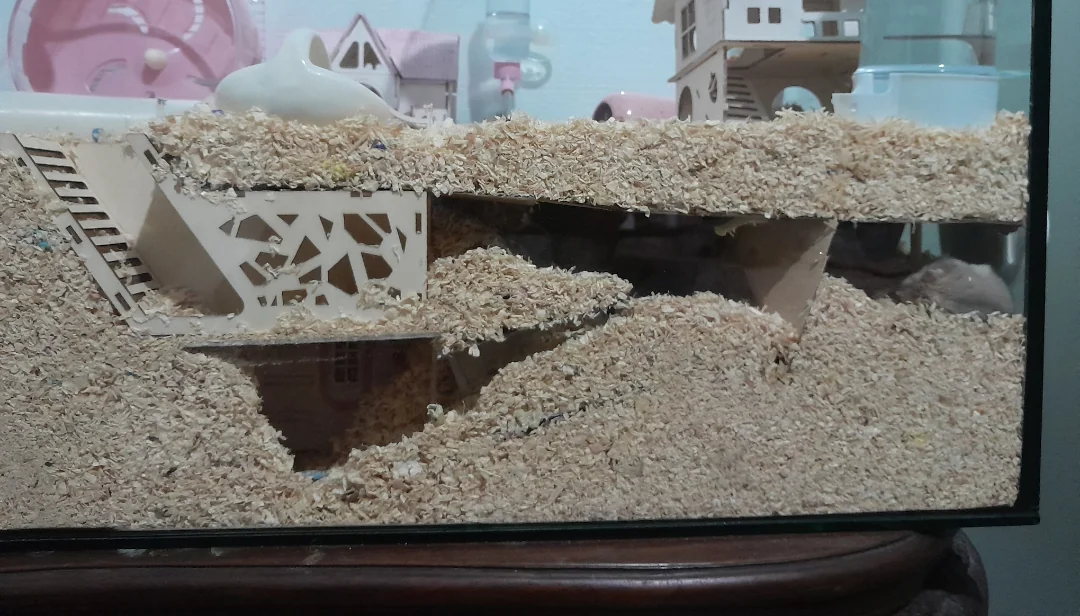
Stable burrows
Good bedding should hold tunnels well enough for your hamster to create sleeping chambers and pathways.

Unsafe bedding
Avoid scented bedding, dusty bedding, pine, cedar, cotton fluff, and anything that may irritate or harm your hamster.
Recommended bedding depth
Providing deep bedding helps replicate a more natural environment, reduces stress, and encourages healthy digging and nesting behavior. We recommend a bedding depth of 8+ inches, though 10–12+ inches is even better whenever possible.
| Bedding depth | Care quality | What it allows | Notes |
|---|---|---|---|
| 1–3 inches | Too shallow | Very limited digging | Common in small cages, but not enough for natural burrowing. |
| 4–6 inches | Better, but still limited | Some digging and nesting | May work as a lower area, but should not be the only bedding depth. |
| 8 inches | Recommended minimum | Basic burrowing behavior | A good starting target for proper hamster care. |
| 10–12 inches | Very good | More stable tunnels and deeper nesting | Great for most hamsters when the bedding holds shape well. |
| 12+ inches | Excellent | Complex burrows and natural tunnel systems | Best when used in a large enclosure with safe support and ventilation. |
How to measure bedding depth
Measure bedding from the bottom of the enclosure to the top of the bedding after it has been lightly packed down. Loose bedding often looks deep at first, but it compresses when your hamster walks, digs, or sleeps in it.
Measure the bedding after gently pressing it down. A fluffy loose pile may not be as deep as it looks once it settles.
You do not need the entire enclosure to be the exact same depth. Many great setups use one deep bedding zone and one lower activity zone for the wheel, water, sand bath, or heavy items. The important part is that your hamster has a large enough deep area to actually burrow.
What good bedding should do
Not all bedding works the same way. Some bedding is soft but collapses easily, while other bedding holds tunnels better. A good burrowing setup should be safe, low-dust, unscented, absorbent, and able to hold shape when packed down.
- Hold tunnels Bedding should be able to support burrows instead of collapsing immediately.
- Stay low-dust Dusty bedding can irritate your hamster's respiratory system.
- Be unscented Hamsters have sensitive noses. Scented bedding can be overwhelming and stressful.
- Feel soft enough for nesting The bedding should be comfortable for sleeping, digging, and moving through.
- Absorb moisture Good bedding helps control mess, especially around pee spots and nesting areas.
Good bedding options
Safe bedding can come in several forms. Many owners use a mix because combining materials can help with tunnel stability, odor control, and texture.
Paper bedding
Soft, absorbent, and commonly used. Choose unscented, low-dust paper bedding with no added fragrance.
Aspen shavings
Aspen is a safer wood bedding option than pine or cedar. It can add structure when mixed with paper bedding.
Hay mixed in
Small amounts of soft hay can help tunnels hold shape and add natural texture. Avoid sharp or overly dusty hay.
Safe nesting material
Plain toilet paper or unscented tissue can be shredded and offered as safe nesting material.
Mixing bedding for stronger burrows
Paper bedding alone can work, but some brands collapse more easily than others. Mixing in safe materials can help create stronger tunnels. A common approach is to use mostly paper bedding, then mix in aspen or soft hay for structure.
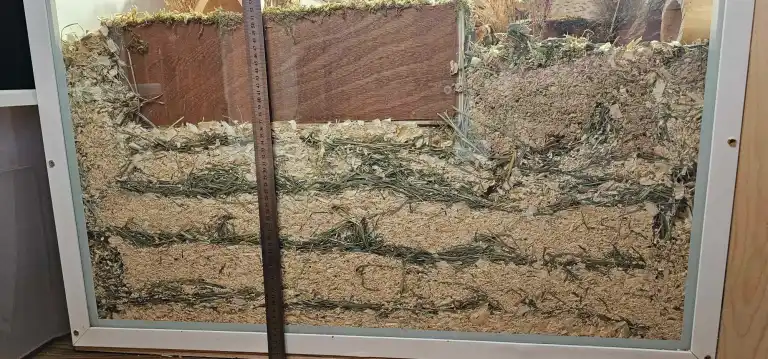
A safe bedding mix can help burrows hold their shape better than loose fluffy bedding by itself.
- Use mostly safe bedding Paper bedding can make up the main base because it is soft and comfortable.
- Add structure Aspen or soft hay can help tunnels stay open when mixed throughout the bedding.
- Pack it gently Lightly pressing bedding down helps it become more stable for digging.
- Create bedding hills Sloped bedding areas make the enclosure more natural and interesting.
Bedding to avoid
Some bedding products are unsafe even if they are sold for small animals. Always check what the material is made from before using it in your hamster's enclosure.
- Pine and cedar bedding These wood beddings can contain aromatic oils that may irritate hamsters. Aspen is the safer wood shaving choice.
- Scented bedding Added fragrances can be stressful and irritating for hamsters, even if the bedding smells nice to people.
- Cotton fluff or fluffy nesting material Fluffy nesting products can wrap around limbs, cause injuries, or create dangerous blockages if swallowed.
- Dusty bedding Excessive dust can bother your hamster's nose, eyes, and breathing.
- Cat litter Cat litter is not appropriate as main bedding and may be dusty, scented, clumping, or unsafe if chewed.
- Random outdoor materials Soil, leaves, moss, or wood from outside may contain pesticides, bugs, mold, or unsafe chemicals.
How to set up deep bedding
Deep bedding works best when it is set up with the rest of the enclosure in mind. Heavy items should not sit directly on top of deep bedding where they can sink or collapse onto a burrow. Use platforms or stable supports for heavy hides, water dishes, sand baths, and wheels.
- Create a deep zone Make one large section of the enclosure 8–12+ inches deep so your hamster has a real burrowing area.
- Support heavy items Place heavy hides, bowls, sand baths, and wheels on platforms or solid surfaces so they do not crush tunnels.
- Add tunnel starters Cork logs, cardboard tubes, and buried hides can help your hamster begin exploring underground.
- Keep the wheel clear The wheel needs enough clearance so bedding does not jam underneath it.
- Use safe clutter above the bedding Sprays, cork, bridges, and hides make the bedding area feel covered and secure.
Cleaning deep bedding
Deep bedding does not mean you need to remove everything constantly. In fact, fully cleaning the whole enclosure too often can stress your hamster because it destroys their scent, nest, tunnels, and food storage areas.
Instead, spot clean dirty areas regularly. Remove soiled bedding, old fresh food, and wet spots while keeping most of the clean bedding and burrow structure in place. Larger cleanouts should be done only when needed, and some clean bedding should usually be mixed back in so the enclosure still smells familiar.
- Spot clean pee areas Many hamsters choose one or two bathroom spots. Cleaning those areas keeps the enclosure fresher without destroying everything.
- Remove old fresh food Fresh vegetables or moist foods should not be left buried where they can mold.
- Preserve the nest when possible Avoid destroying the sleeping area unless it is dirty or unsafe.
- Keep some clean old bedding Mixing clean old bedding back in helps reduce stress after cleaning.
Common mistakes
The biggest mistake is adding only a light sprinkle of bedding because it looks cleaner. Hamsters need bedding depth more than they need a perfectly flat, tidy floor. Another common mistake is buying an enclosure that is too shallow to hold enough bedding in the first place.
- Using too little bedding A thin layer prevents real burrowing and makes the enclosure less natural.
- Counting loose fluffy height Bedding should still be deep after it settles and compresses.
- Putting heavy items on tunnels Heavy items can sink or collapse burrows if they are not supported.
- Cleaning too aggressively Removing all bedding too often can stress your hamster and erase their familiar scent.
- Using unsafe bedding because it is cheap Avoid scented, dusty, pine, cedar, and fluffy nesting products.
Signs your hamster may need more bedding
Some hamsters will try to burrow even in shallow bedding, but the tunnels collapse or never form properly. Others may stop trying if the setup does not allow it. Behavior can vary, but these signs may mean the enclosure needs a deeper bedding area.
- Digging at corners Constant corner digging can mean your hamster wants to dig deeper but cannot.
- No stable tunnels If tunnels collapse immediately, the bedding may be too shallow or too loose.
- Sleeping in exposed areas Your hamster may not have enough depth or privacy to build a proper nest.
- Stress behaviors Bar biting, pacing, and escape attempts can be linked to a setup that lacks space, depth, or enrichment.
Final recommendation
Deep bedding is a core part of hamster care. Aim for at least 8 inches, with 10–12+ inches being even better. Use safe, unscented, low-dust bedding that can hold tunnels, and create a large enough deep area for real burrowing.
Best choice
Give your hamster a large deep bedding section, safe tunnel-supporting materials, stable platforms for heavy items, and enough clutter above the bedding to make the burrow area feel secure.